

Why does this matter

For flex and workspace operators, connectivity is part of the product. Members expect it to work from day one, and every delay can affect revenue, service quality and customer experience.

BuildingConnect helps turn up spaces quickly, support changing layouts and deliver a more consistent connectivity experience across the building.

The operational model needs to support rapid churn, fast desk turn-up and reliable service across locations without adding unnecessary complexity.
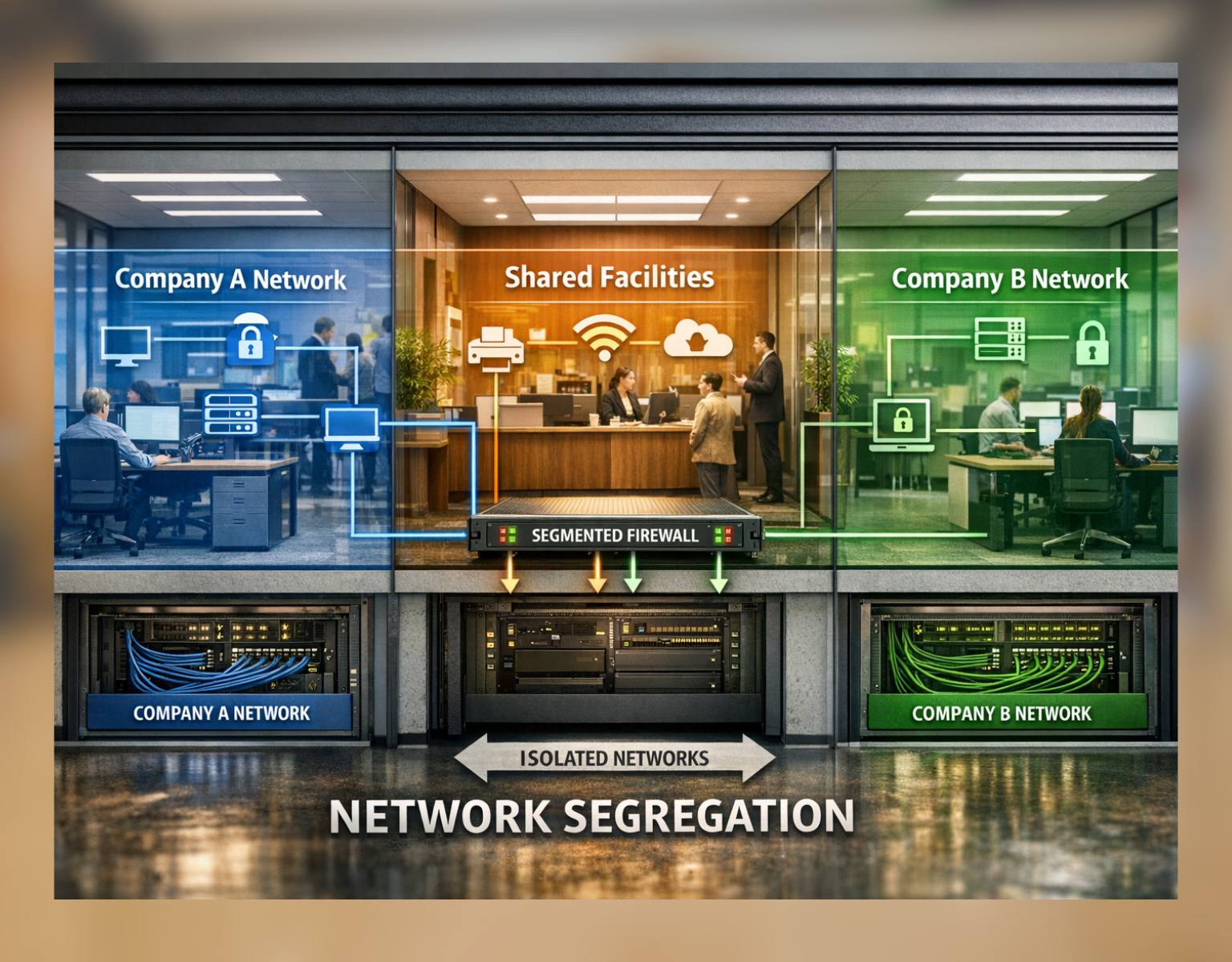

Illustration of network segmentation in an office building

What we often see

In a flexible workspace, connectivity is expected to just work and to be ready from day one.

But as layouts change and new occupiers move in, teams often need to adjust setups, coordinate suppliers, or add workarounds to keep things running smoothly.

It works, but it can take time and effort to maintain, especially as you scale across more space or locations.

An IT engineer wearing a headset sits at a computer, actively working on a service desk system to provide technical support.

Common challenges

Getting space live quickly: delays in setting up connectivity can leave desks empty and push back move-in dates.

Keeping the experience consistent: if connectivity varies across the building, it shows up in complaints and affects how members see your service.

Time spent on support: ongoing issues and repeat fixes can take up a lot of your team’s time, especially when the setup changes frequently.

Growing without adding complexity: custom setups for every space or occupier can work at first, but they become harder to manage as you scale.

What does BuildingConnect change?

BuildingConnect gives flex and workspace operators a consistent setup across the whole building, so you can get spaces up and running quickly and deliver a reliable experience every time.

Instead of juggling multiple providers, you have one clear point of responsibility, making issues easier and faster to resolve. You can manage spaces and users yourself through the self-service portal, allowing you to make changes without delays.

  • Fast turn-up: desks, suites and floors can come online quickly, without waiting for new carrier installs each time.
  • Consistent experience: a reliable setup helps prevent common issues like slow or unstable Wi-Fi, so members have a smoother experience every day.
  • A model you can repeat: use the same approach across sites to protect margins while growing.
  • Less dependency risk: fewer last-minute blockers that derail openings and changeovers.

How does this help day to day?

  • For your team: less time chasing issues and dealing with last-minute fixes.
  • For sales: more confidence in move-in dates, because connectivity is already in place.
  • For members: a smoother day-one experience, with everything working as expected.

Things to consider

Before your next meeting, it’s worth asking how quickly you can get a new suite up and running today, and what tends to slow that process down.

It also helps to be clear on the level of connectivity you want members to experience across the building, and whether your current setup supports that consistently.

Finally, look at the types of support requests your team deals with most often, and how many of them are linked to the building’s existing setup.

Get your spaces live faster from day one

We’ll show flex and workspace operators how to set up a building so new suites and desks can be up and running quickly, with a consistent experience for every member.

FAQs


Very quickly. Once the setup is in place, you can bring new spaces online without waiting for new installs.

Yes. The building-wide setup means you are not rebuilding connectivity every time layouts or occupiers change.

It helps minimise them. A consistent, reliable setup across the building reduces common day-to-day connectivity issues.

Yes. You can make changes through a simple portal, without relying on support every time something changes.